Understanding Zionism: A Long and Winding Road
Zionism, at its core, represents the idea and movement advocating for a Jewish homeland in Palestine. This arose from centuries of diaspora (scattering) and escalating antisemitism in Europe, gaining momentum in the late 19th and early 20th centuries. It was a response to persecution – a search for security and self-determination. The rise of global nationalism provided fertile ground for this aspiration. But what did Zionism actually mean? It wasn't straightforward.
Did you know that the Zionist movement wasn't a monolithic entity? A staggering 70% of early Zionist settlers were from Eastern Europe, fleeing pogroms and seeking refuge.
Diverse Visions: A House Divided
Zionism wasn't a unified group. Ideologies varied wildly. Some were deeply religious, rooted in prophetic promises of a return to the ancestral land. Others embraced secular socialist ideals, envisioning a cooperative society. Still others focused on building a modern, technologically advanced nation. These differences often led to internal conflict and debate, even as they pursued a common goal. How could such disparate visions coexist? The shared experience of oppression and the yearning for a safe haven provided the common thread. The question remains: How did these diverse viewpoints affect the eventual outcome?
The Path to Statehood: Triumphs and Tragedies
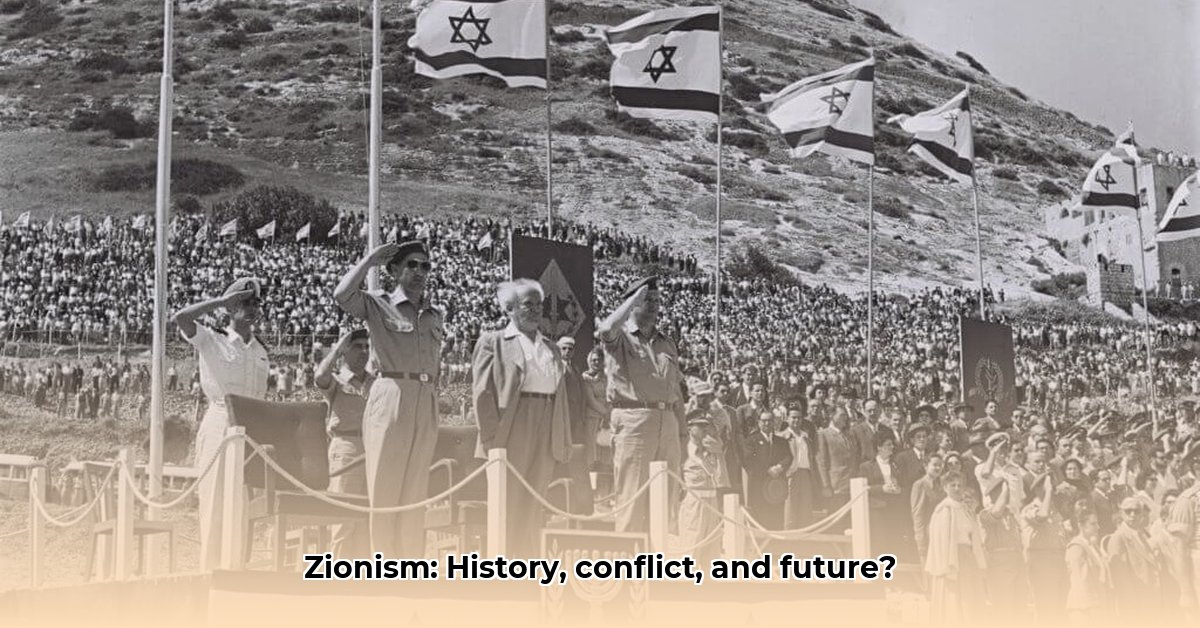
The establishment of the State of Israel in 1948 was a watershed moment. This marked the culmination of decades of striving and a remarkable achievement for the Zionist movement. However, it was also a traumatic event for Palestinians, leading to displacement and conflict that persists to this day. This sharply defines the complexities of Zionism. The creation of Israel, a triumph for one people, came at a devastating cost to another. It reminds us that history is rarely simple. A significant 750,000 Palestinians were displaced in 1948 alone, a reality that continues to shape the present-day conflict.
The Enduring Debate: Interpretations and Criticisms
Zionism's legacy remains a subject of intense scrutiny and debate. Were the methods justified? What are the ongoing consequences? Critics point to the displacement of Palestinians as a serious moral failing. Supporters, meanwhile, emphasize the right to self-determination in the face of persecution. These clashing perspectives highlight the need for meticulous, nuanced analysis rather than simplistic judgments. This is crucial to understanding Zionism. How can we reconcile these sharply contrasting narratives?
Zionism Today: Navigating a Complex Reality
Today, Zionism continues to evolve. Its goals, once relatively straightforward, are now challenged by internal Israeli dynamics and global political realities. Different interpretations and approaches within modern Israel reflect the historical complexities of the movement’s own evolution. The future will undoubtedly see further development. What are the key challenges facing Zionism in the 21st century?
Understanding the Nuances: Moving Forward
Understanding Zionism requires grappling with its multifaceted nature. It demands a sensitive approach, embracing diverse perspectives and acknowledging both triumphs and tragedies. This is a history that must be explored with nuance, empathy, and a commitment to historical accuracy. Only then can we truly understand its lasting impact. Are we ready to engage with such a complex and challenging task? The answer, like history itself, is far from simple.
A Glimpse into the Future: What Lies Ahead?
The future of Israel and Palestine is inextricably linked to Zionism's legacy. Various factors, such as demographic shifts, economic development, and international relations, will influence future events. Some experts predict a continuation of the conflict, while others see potential solutions in a two-state solution or another model of coexistence. The outcome depends on the willingness of all involved parties to compromise and build a shared future. The path forward remains uncertain, but the debate and the quest for peace are likely to persist.
How Differing Zionist Ideologies Impacted the Palestinian Population
The impact of Zionism on Palestinians is complex. Understanding this requires moving beyond simplistic narratives.
Early Visions and Unintended Realities
Early Zionist thinkers sometimes envisioned coexistence. These were idealistic. They failed to fully grasp the intensity of Arab nationalism or the potential for conflict from large-scale Jewish immigration. Initial optimism for peaceful integration clashed with competing national identities and land claims. Early Zionist leaders often underestimated the strength of Palestinian resistance to Jewish immigration and settlement. How could this miscalculation have been avoided?
Ideological Divide: Labor vs. Revisionist Zionism
Significant ideological divides existed within Zionism. Labor Zionism emphasized gradual cooperation and eventual compromise. They believed economic development would ease tensions. This approach proved inadequate in the face of escalating Arab resistance. The 1936 Arab revolt underscored the limitations of this approach.
Revisionist Zionism, championed by figures like Vladimir Jabotinsky, advocated for a more assertive approach, prioritizing Jewish security and resisting territorial concessions. This led to direct conflict with Palestinians, accelerating displacement and altering the demographic landscape. How did these differing strategies impact the conflict's trajectory?
The Two-State Solution: A Promise and a Paradox
The two-state solution, while seemingly a compromise, faces persistent challenges. Continued Israeli settlement expansion in the West Bank undermines its viability. The question of Palestinian refugees' "right of return" adds complexity. The ongoing debate about the return of Palestinian refugees fundamentally challenges the viability of a two-state solution and the overall concept of a Jewish majority state.
Consequences and Lasting Impacts
Zionist ideologies have had profound consequences for Palestinians, leading to displacement, land loss, and ongoing conflict. The legacy of these events continues to shape the region. The current state of the conflict is a direct result of these ideological clashes and their practical ramifications. The weight of history, shaped by these ideological differences, continues to pressure the region. What are the long-term implications of these historical events?